Hardware — built
Small-batch Eurorack modules, pedal-format utilities, and aluminum cases — designed, machined, and assembled in our Seattle workshop. Open standards, no collector markup.

Eurorack hardware, circuit-accurate plugins, and sample packs — designed and built in Seattle.
Four all-analog 6HP Eurorack modules from the celebrated CC0 designs of Super Synthesis — sequencer, scanner, envelope, and VCA, in production here in Seattle.
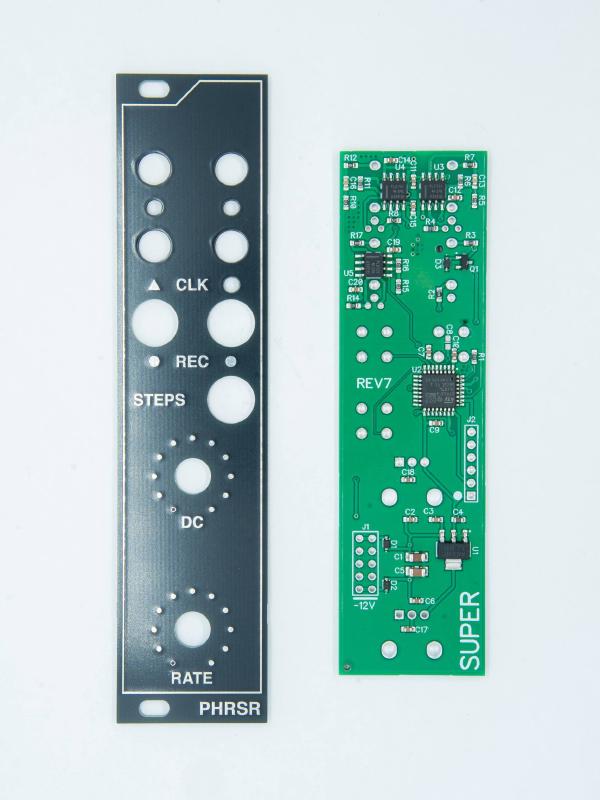
Two-channel 1–16 step knob recorder / sequencer. Records knob movements, plays them back as CV.
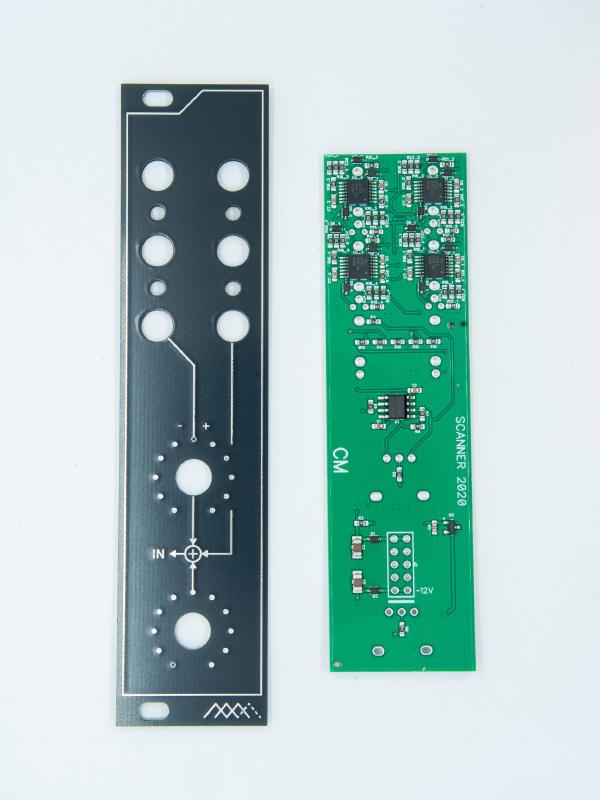
Takes 0–5V in, outputs four overlapping triangular CVs. Feed it a saw, get quadrature triangles.
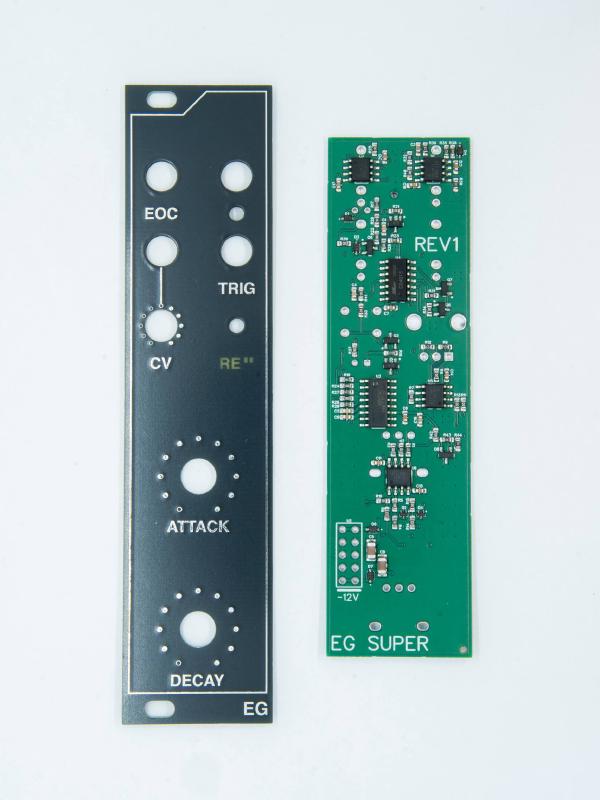
All-analog voltage-controlled Attack-Decay envelope generator with End Of Cycle trigger output.
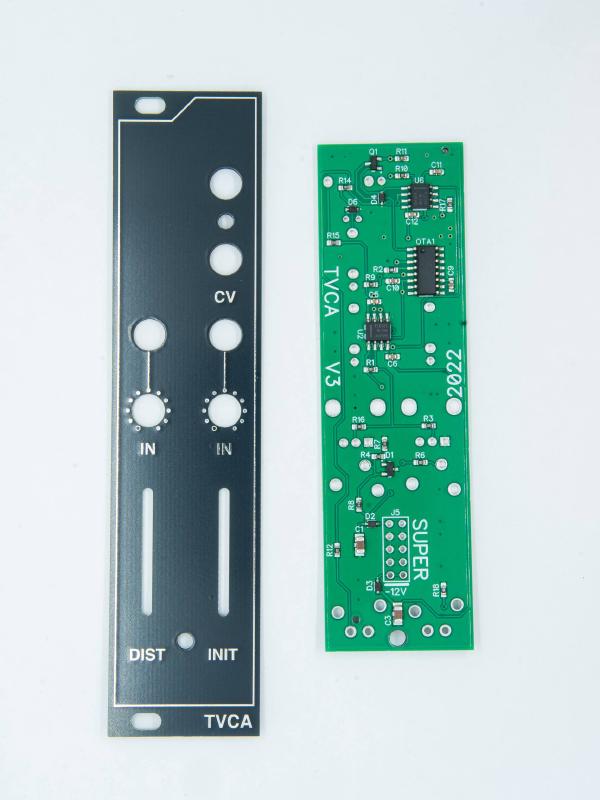
Two-input VCA built around the LM13700 OTA, with a distortion path that exploits its tanh transfer function.
Original designs by Chris McDowell of Super Synthesis, released under CC0. We keep them in production. See all hardware →
One philosophy: honest sound at a fair price. Simulated, sampled, or built — pick your path.
Small-batch Eurorack modules, pedal-format utilities, and aluminum cases — designed, machined, and assembled in our Seattle workshop. Open standards, no collector markup.
Wave Digital Filter emulations modeled component-by-component from the original schematics, on our open-source PedalKernel engine. Perpetual license, no iLok.
Tracked through the actual gear in our Seattle room — real synths, real preamps, real iron. 24-bit / 48 kHz, royalty-free, instant download.
WDF is a physical-modeling technique from classical network theory, introduced by Alfred Fettweis in the 1970s. Every component in a circuit becomes a wave-scattering element, wired in the exact topology of the original schematic. Our plugins are built from the circuit diagram — not from recordings of one unit on one afternoon.
We start from the original circuit diagram and service documentation. Every resistor, capacitor, diode, and gain stage goes into a netlist — nothing is approximated by ear.
Each part becomes a wave-domain element with the physics of the real one: capacitors store charge over time, diodes clip, tube and transformer stages stay nonlinear at audio rate.
Series and parallel adaptors reconnect the parts in the original topology, so voltages and currents obey the same Kirchhoff laws they do on the bench.
The whole circuit runs sample-by-sample on PedalKernel, our open-source engine — so it responds to pick attack and guitar volume the way hardware does.
pedal "Tube Screamer" {
  components {
    R1: resistor(4.7k)
    C1: cap(220n)
    D1: diode_pair(silicon)
    Gain: pot(500k)
  }
  nets {
    in -> C1.a
    C1.b -> R1.a, D1.a
    D1.b -> gnd
    R1.b -> Gain.a
    Gain.b -> out
  }
  controls {
    Gain.position -> "Drive" [0.0, 1.0] = 0.5
  }
}
This is real source from the PedalKernel README: components with their actual values, the nets that wire them, and a panel control bound to the pot’s position. The engine compiles it into a real-time WDF processor — turn Drive and the clipping point moves because the 500 kΩ pot moved, not because we crossfaded between snapshots.
WDF isn’t a marketing word — it’s 40 years of peer-reviewed signal-processing research. The engine is built on it.
Loading verified feedback…
No reviews yet — be the first to share your experience.

Be first to know when we launch.
No spam. Just updates on our progress.